Merry Christmas to all our supporters from the Herefordshire Meadows Team!
Below is a roundup of our activities over the last few weeks, plus information about our projects and upcoming events.
Save the date of our Annual Forum – Saturday 22nd February, and book yourself a place on our evening Webinar on Tuesday 21st January, where we will be giving an update about the ELMs options for Species Rich Grassland.
Click here to open in browser if you have trouble viewing this newsletter
|
|
|
|
AGM and Winter Lecture
Tuesday 3rd December at Holme Lacy Village Hall |
|
|
|
Epping Forest no-fence collar grazing |
|
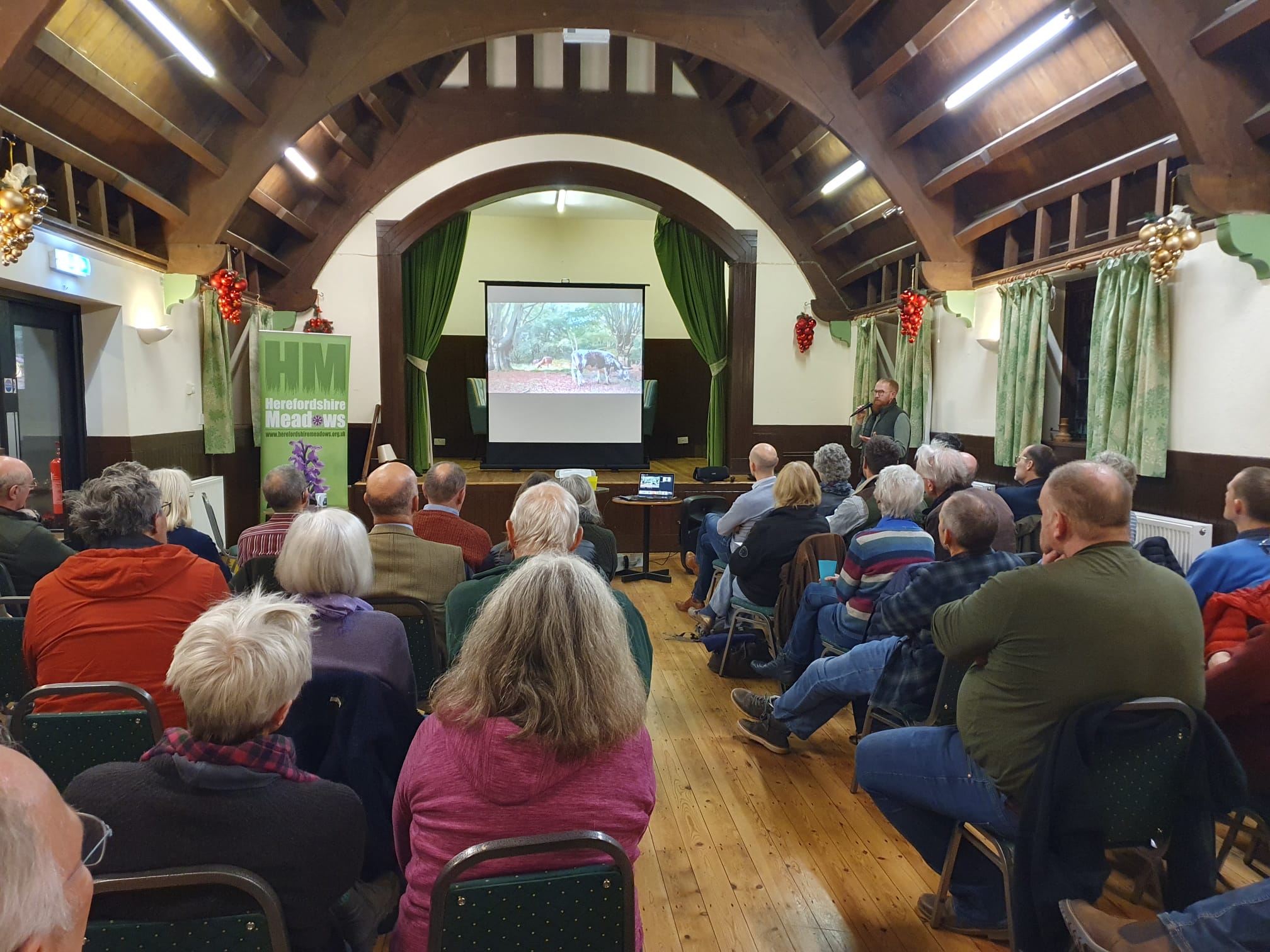
John Phillips, Grazing and Landscape Manager at Epping Forest, gave a fascinating and entertaining talk about their trailblazing use of a no-fence collar conservation grazing system, introduced in 2010.
Cattle grazing plays a crucial role in the management of Epping Forest’s extensive and nationally important habitat mosaic of veteran trees, woodland, pasture, heathland and scrub, and was home to the UK’s first ever no-fence collar grazing system. This new technology has allowed conservation grazing to be introduced to an urban landscape with over 12 million visitors a year, major transport links, and almost 6000 acres of mostly unfenced land.
John Phillips talked us through the fascinating history of the area and the development of their herd of longhorn cattle. You can find a link to John’s presentation slides on our website here and you can read more about the project here |
|
| | Annual General Meeting 2024 |
|
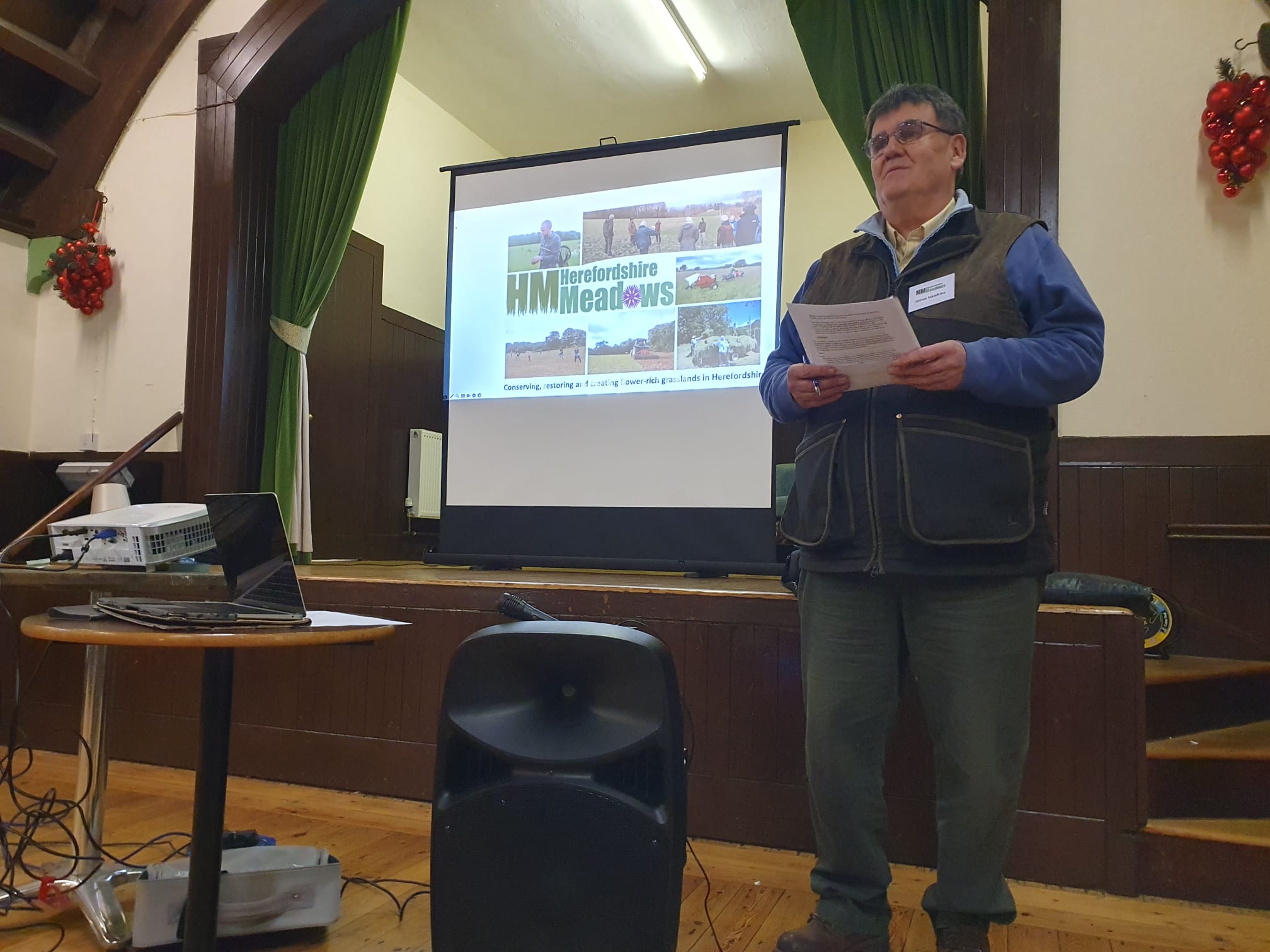
At the AGM James Hawkins stepped down after an impressive 8 years of service as Chair of Herefordshire Meadows. Thank you James for your tireless support and good humour over the years, from the very beginings of the group to becoming a registered charity in 2022. James will continue to support Herefordshire Meadows as a Trustee.
James gave an overview of the work completed in the previous financial year, including the creation of 36ha of new species-rich grassland and many successful and well attended events and training sessions.
This was followed by the election of new Trustee John Watkins, and re-election of two existing trustees James Hawkins and Mark Wood, and announcement that Trustee Julian Partridge has agreed to stand as new Chair. A summary of the annual accounts was then given by co-director Rory Johnson.
|
|
|
|
Herefordshire Meadows
Job Oportunity
Herefordshire Meadows is looking for a Meadows Adviser to lead on small scale project management and delivery, and to support ongoing meadow restoration projects and grassland conservation across the county.
The role requires a self-employed individual to work a minimum of 2 and maximum of 4 days (28 hrs) per week.
|
|
| | |
|
Wyescapes
a Landcsape Recovery project |
|
|
|
| The Wyescapes project is led by Herefordshire Rural Hub in partnership with delivery partners Herefordshire Meadows (HM), Herefordshire Wildlife Trust and The Wye and Usk Foundation.
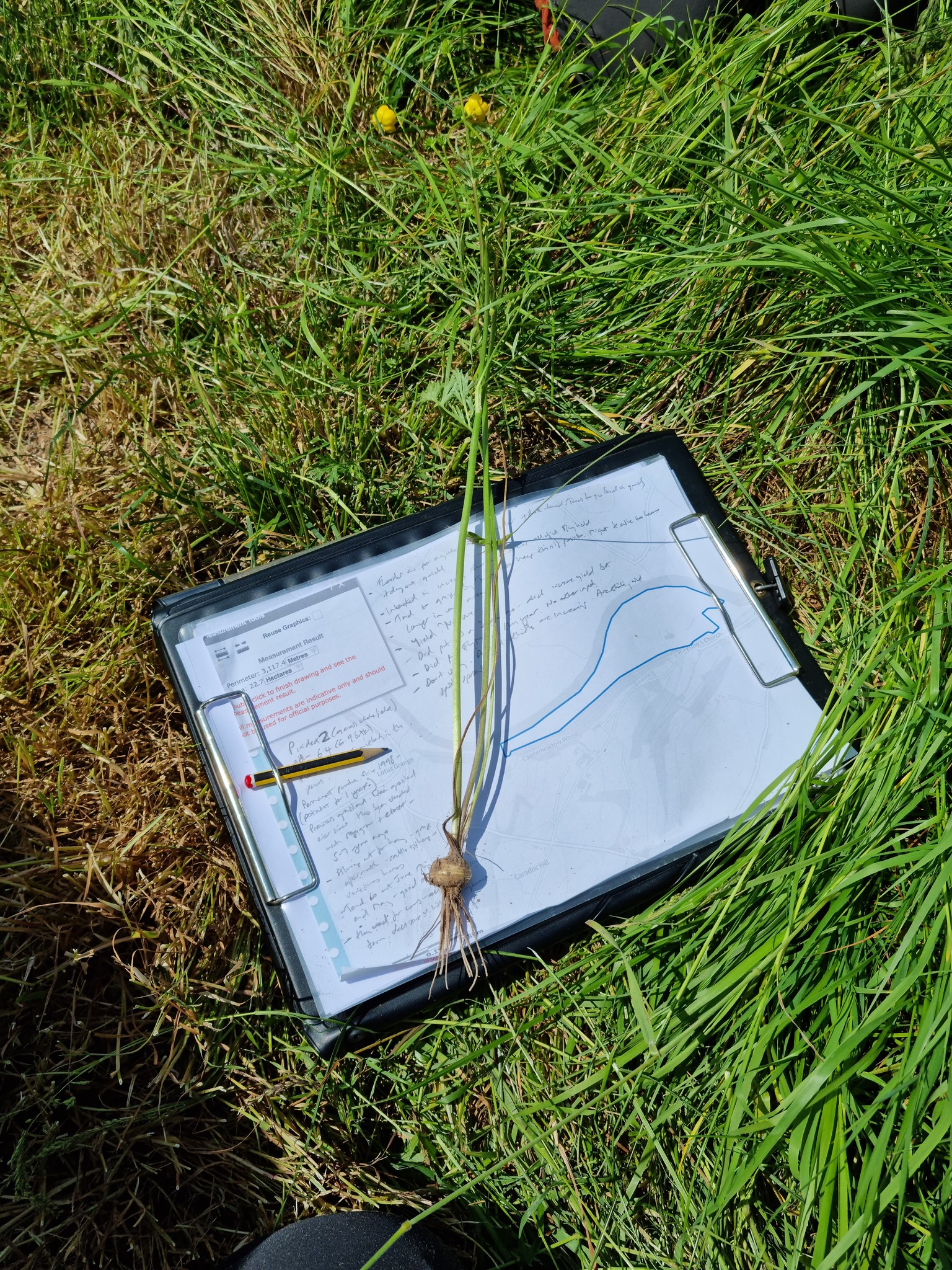
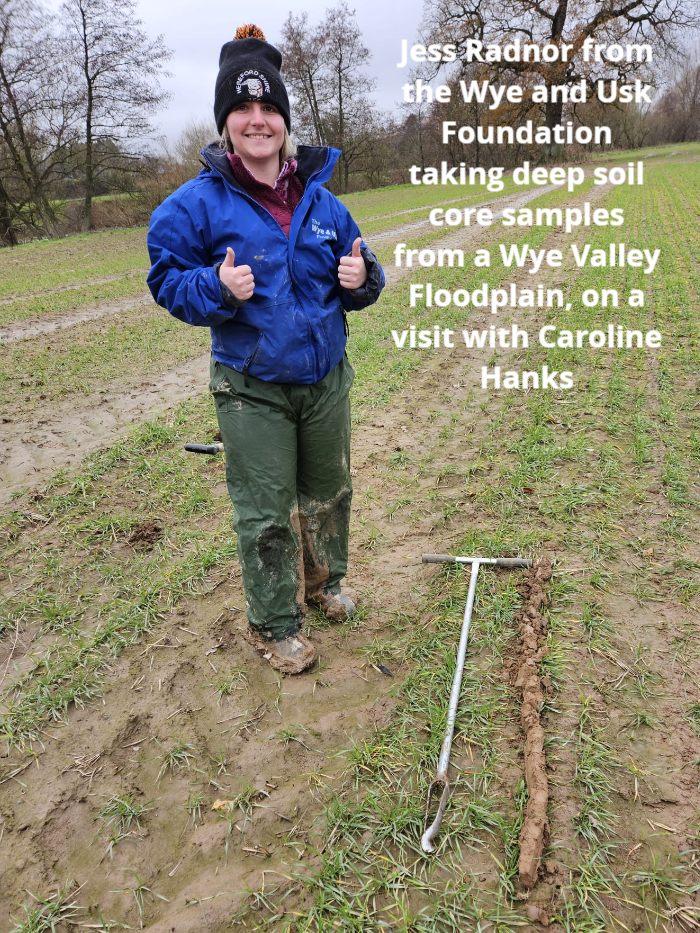
Herefordshire Meadows are working specifically on grasslands and we are very fortunate to be working together with Emma Rothero and Irina Tatarenko from the Floodplain Meadows Partnership (FMP). In summer 2024 they visited some of the Wyescapes floodplain sites with us, meeting land managers to scope opportunities for floodplain meadow restoration, both on existing species poor grassland and on arable land. |
|
| |
The role of HM and FMP is to survey the plant communities, study the soil profile and carry out chemical analyses and understand the past land use history and flooding patterns so that land owners are provided with clear guidance on any limiting factors together with a range of possibilities for their floodplain land in Wyescapes.
We will be continuing this work on more floodplain land in 2025.
We are encouraged by the considerable interest in restoring floodplain meadow grassland which is increasing month by month. HM hopes to continue supporting this landscape scale initiative at implementation stage and to create all these wonderful meadows and grassland reversion, advising, supporting and monitoring long term change.
Wyescapes is a long-term, Landscape Recovery project along river corridors of the Wye and Lugg in Herefordshire. The project unites 49 land holdings between Leominster and Symonds Yat with farmers and landowners all committing to a wide range of long-term environmental changes such as reducing fertiliser-use, reverting fields next to the river from arable crops to grassland, and creating new wetlands, floodplain meadows and woodlands.
Landscape Recovery is a chance for long term change to farming practices allowing a more sympathetic way to produce food. In addition, local communities will benefit from enhanced access and new ways to connect with the landscape.
Wyescapes is funded by DEFRA until March 2026 for a development phase to carry out ecological baseline surveys, develop rigorous, site-specific plans and create a blended finance model that will sustain Wyescapes as a long-term project, of at least 20 years duration.
Look out for a Wide Stakeholder Survey coming out soon and please respond it you’d like your views to be heard. Future newsletters will have updates as the project progresses
|
|
|
|
Into a new Era
James Hawkins hands over Chair of Herefordshire Meadows
after 8 years |
|
At our AGM on 3rd December Trustee Mark Wood paid a well-deserved tribute to James Hawkins who has been at the helm of Herefordshire Meadows since the group formed in 2016.
James was at the first meeting at The Bunch of Carrots where the founding 30 members decided to apply to Natural England’s Facilitation Fund. Since then Herefordshire Meadows has grown steadily and James has given his time and guidance very generously as we’ve expanded and evolved into a charity.
Through thick and thin he has always supported the team, set a fantastic example of meadow management and restoration on his own farm and encouraged small holder and farmer members to do the same.
His support and encouragement is much appreciated by members, Trustees and the whole of the Herefordshire Meadows team.
|
|
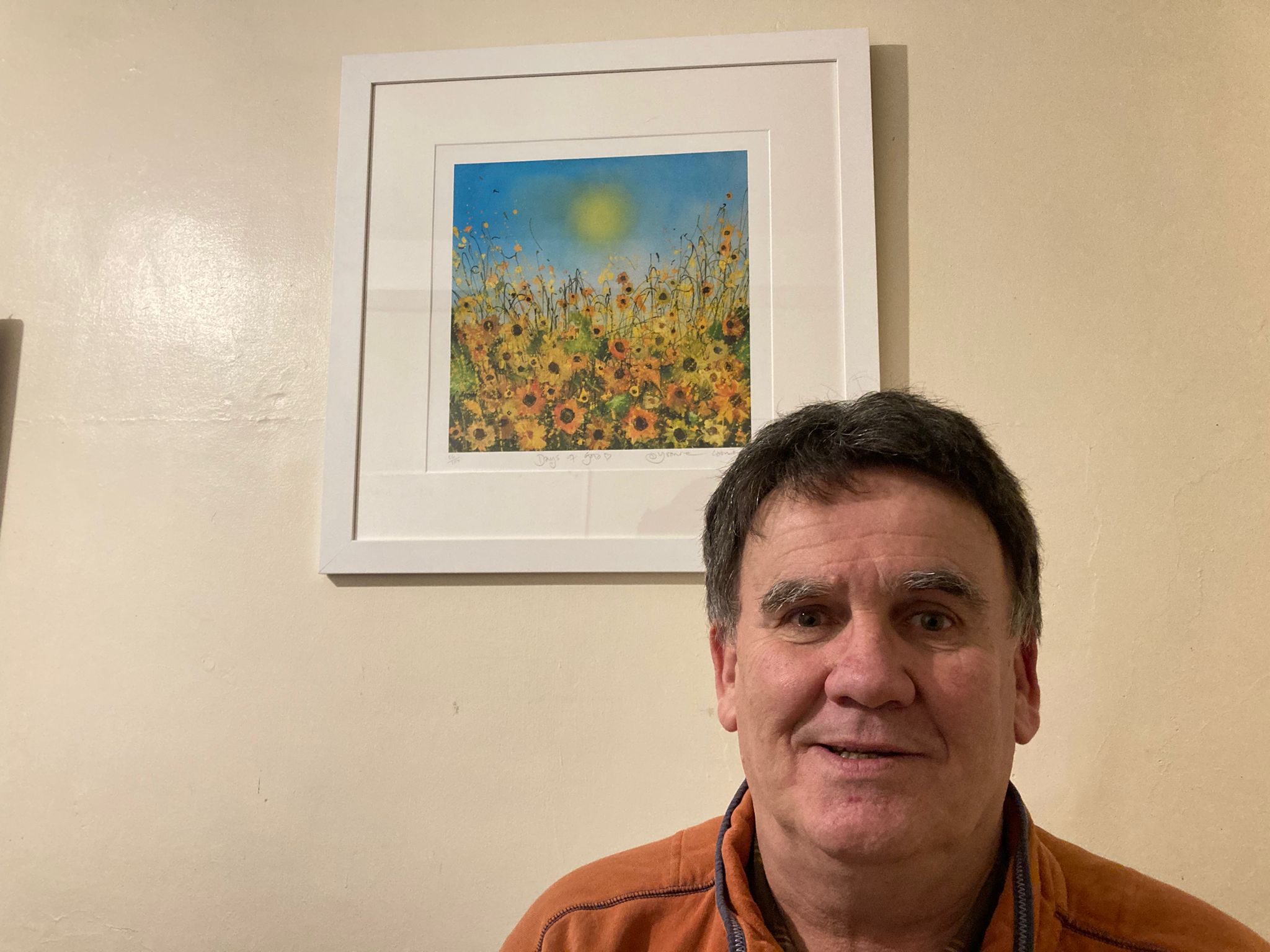
| At a Trustees meeting on 16th December, James was presented with a wildflower print which we hope will remind him of how much he is appreciated.
We are delighted that James is continuing as a Trustee and that Julian Partridge has been confirmed as incoming Chair of Herefordshire Meadows and Lyn Langford as Vice Chair. We look forward to working with them as Herefordshire Meadows continues its work with existing and new members and on exciting projects across Herefordshire
We will feature more about Julian as our new Chair in a future newsletter.
|
|
|
|
Countryside Stewardship Higher-Tier
Details released of new tier of ELMs
Last week Defra released details of the new CSHT scheme and you can review the 132 management actions and 151 capital items in CSHT. The scheme is opening initially through a controlled rollout of invited land managers with plans for CSHT to be fully open for applicants later in 2025. All the details are in the link above / below including the new actions for Floodplain Meadows and Species-rich grassland which confusingly has the code CGS22 which is different from the code GRH6 in SFI. There will surely be more webinars in future from different organisations. We will be supporting and learning from schemes worked up with NE by invited HM members during the initial roll out, and gain experience that we can share in time for the full opening of the scheme later in 2025. |
|
|
|
Winter Management and seedling
ID training day 2024 |
|
|
|
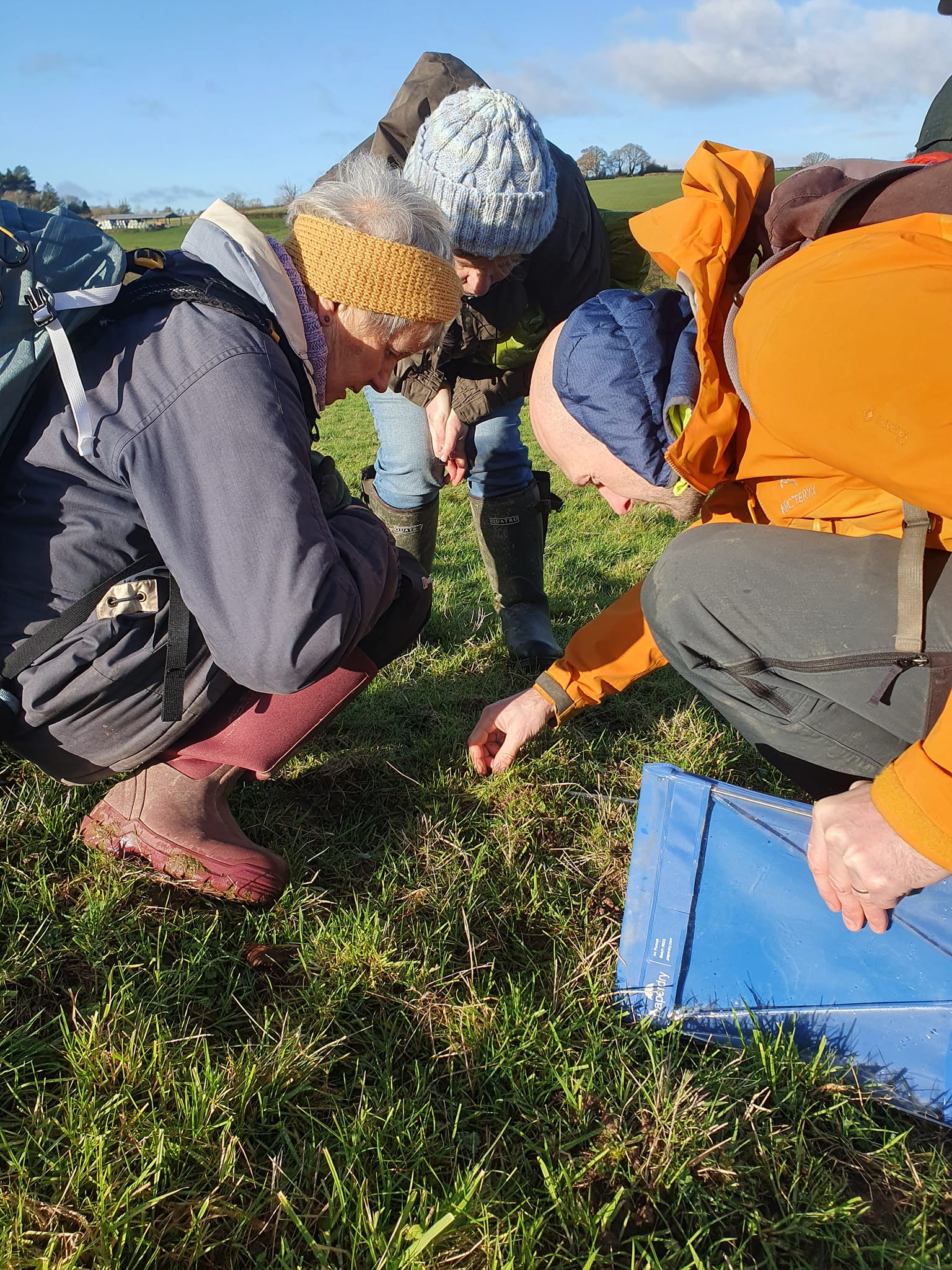
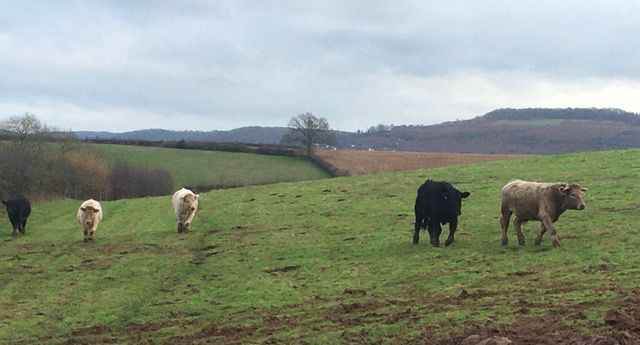
A very big thank you to Kate Gatacre who hosted this year’s seedling safari and winter meadow management training day at The Batches in Brockmanton. Kate has restored 4.55ha of species poor grassland using funds very generously provided by Herefordshire Council via their Natural Flood Management (NFM) Project and brush harvested seed from Bromyard Downs (a nearby Local Wildlife Site). After an introduction to the site itself we discussed the restoration methods used. A shallow power harrow immediately after the hay cut helped to open up the grass dominated sward and create enough bare earth before the introduction of the donor seed. We then discussed the importance of keeping the sward open over the first winter and discussed the different methodologies for achieving this; both through grazing and mechanical means. The key message is to take the seedling’s eye view and think about how to maximise the availability of the three essential things needed for germination; light, air and water. Grazing needs to be monitored carefully to avoid unwanted soil damage through poaching if conditions get too wet in the winter, and also to ensure that any livestock is removed the following spring before they start eating desirable wildflower seedlings, in particular yellow rattle which is an annual. |
|
| | Split into two groups, attendees then had a go at identifying some of the early seedlings already emerging. The following desirable broad-leaved herbs were recorded: Meadow buttercup, Common mouse-ear, Dandelion, Red clover, cuckoo flower, Self heal, common sorrel, lesser trefoil, black knapweed, yarrow, rough hawkbit, common cat’s ear and ox-eye daisy. *species in bold are indicator species new to the site. We then talked about less desirable species, how the risks of these germinating can also increase following grassland restoration works, and when and how is the best time to control them. Selective spot spraying or mechanical removal is suggested during the autumn and early spring and, in the case of spot spraying, when the livestock have been removed. If you want to have a go at some seedling ID yourself here is a link to our Wildflower seedling ID chart |
|
|
|
From Mud Pies to Microbes
Celebrating World Soil Day |
|
|
|
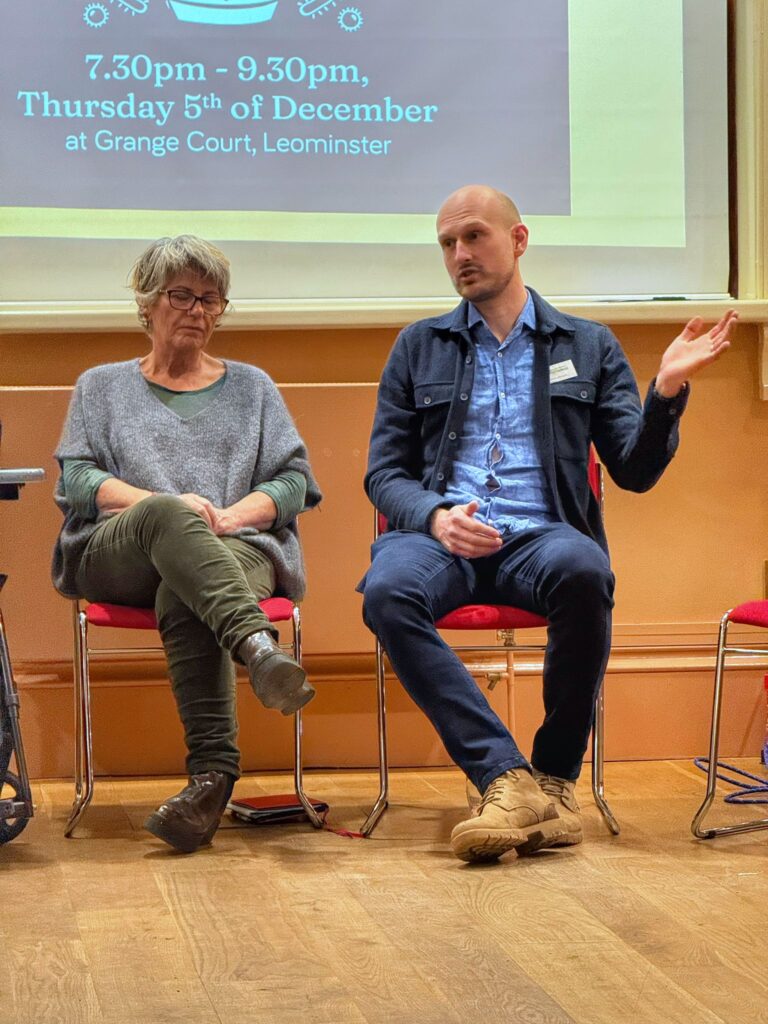
To celebrate World Soil Day on Thursday 5th December, Meadows Adviser Rory Johnson was invited to be on the panel of an event organised by Angela Lloyd at Grange Court in Leominster.
There was a whole host of stimulating questions covering a wide range of topics and highlighting how improving soil health is central to mitigating the climate and biodiversity crises.
Rory spoke about how the healthy soils beneath well managed, species rich grasslands store carbon, alleviate flooding, improve water quality and improve the nutritional value of the plants, and by extension the grazing animals, that feed on them. |
|
| | |
|
Water Environment Improvement Fund (WEIF) Project Update |
|
|
|
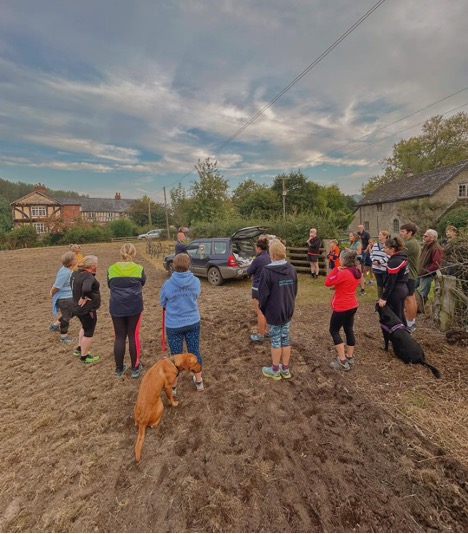
This year we have been supporting landowners in the Frome, Arrow, Lugg and Wye catchments to carry out species rich grassland restoration and enhancement works with support from the Environment Agency’s Water Environment Improvement Fund (WEIF).
We have worked with 10 different landowners to: - create 12.68ha of new species rich grassland including 1.4ha of floodplain meadow.
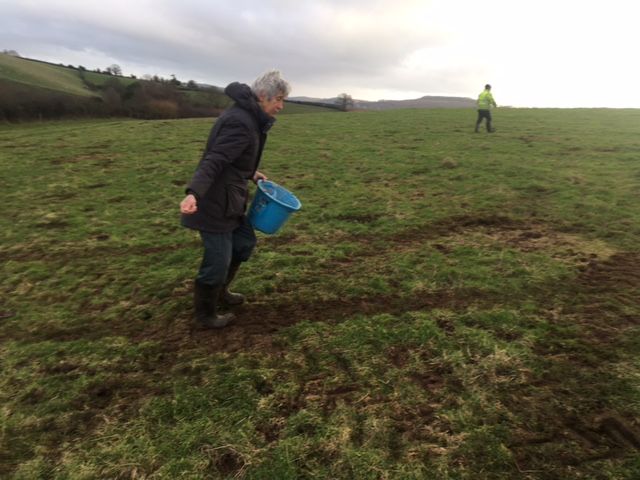
- enhance 7.82ha of developing species rich grasslands through the introduction of additional yellow rattle seed.
- run two volunteer seeding events and a winter management training session.
The project will increase biodiversity, reduce nutrient use and run off, improve soil health, improve animal health and food quality, and increase soil water holding capacity and carbon sequestration in the Wye Catchment. |
|
| | |
|
Herefordshire Meadows WebinarELMs Grassland Options update
Tuesday 21st January
7pm – 8:30pm
Online discussion
Join us to learn about the new species rich grassland endorsed options and how Herefordshire Meadows can support you with the application process.
Book your place HERE
or info@herefordshiremeadows.org.uk
|
|
| | Herefordshire Meadows Annual Forum
With guest speaker Dan Carne,
Director of Woodmeadow Makers.
Saturday 22nd February
9:45am for 10am start – finishes 13:30pm
at Withington Village Hall, HR1 3PP
An opportunity to come together to share and celebrate the work carried out by landowners to support species rich grassland across the county in 2024. Guest speaker Dan Carne will provide an insight into how diverse grasslands fit into a healthy ecosystem mosaic.
SAVE THE DATE! – Booking not yet open |
|
|
|
|
|