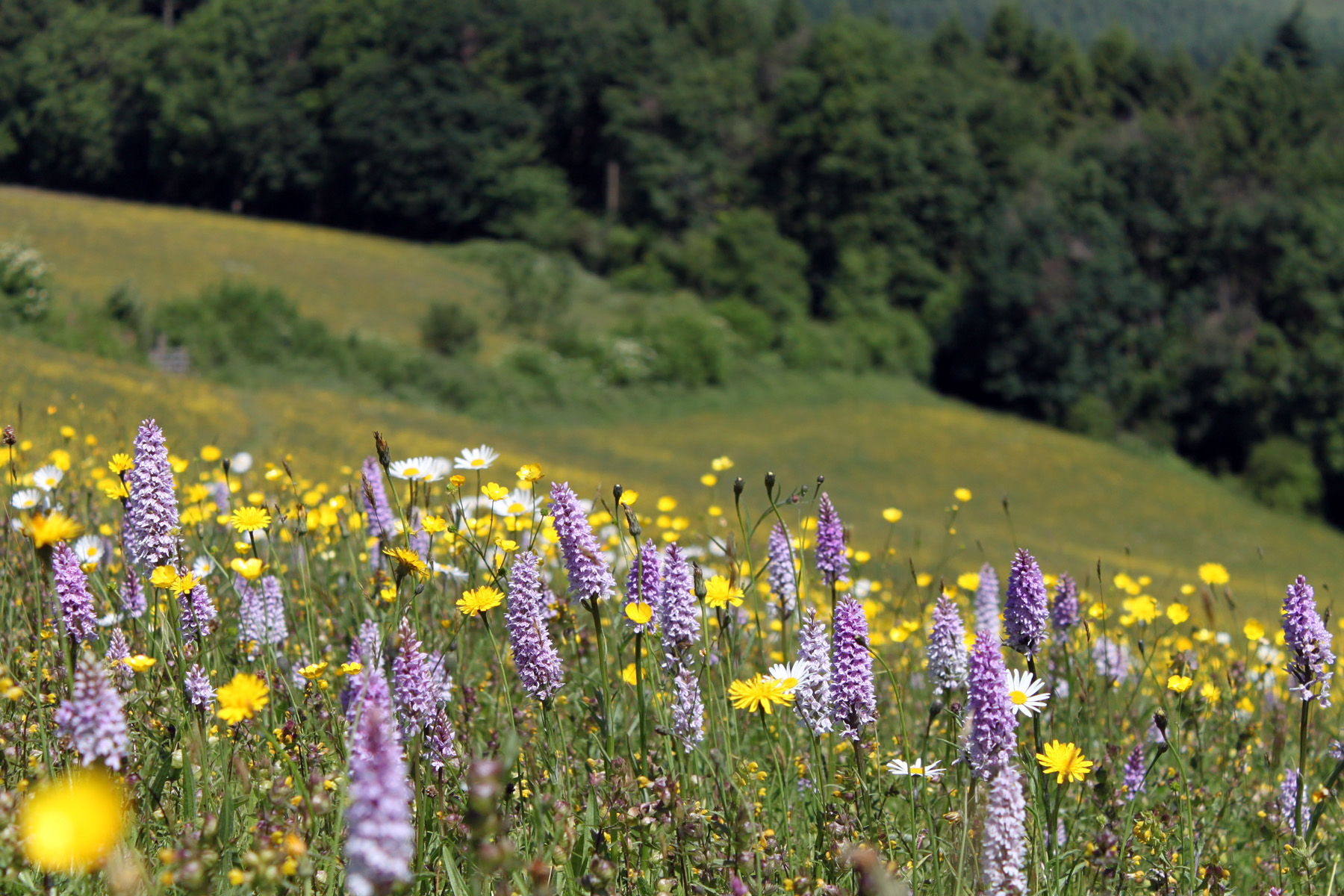

On Tuesday 15th July, a group of Wyescapes farmers and land managers gathered at Caradoc Farm to take part in our technical session on floodplain grassland restoration. We were supported by Floodplain Meadows Partnership Project Manager, Emma Rothero and Dreda Darling, who generously shared her experiences of the recent grassland restoration, and kindly delayed the haylage cut to accommodate our visit.
Some important aspects of restoration process were covered, including wildflower seed provenance, site selection and anticipating and controlling outbreaks of perennial weeds.
The key messages were:
- Grassland restoration is a long-term process. It might seem impossible to see immediate changes but recording plant species as they return provides clear evidence that the restoration is working.
- Native wildflower seed is a limited and expensive resource and should be used only on sites with low P indices and good soil structure, which support meadow species germination. For land with long-term arable history or P indices of 3 or higher, an interim stage may be needed — for example, using diverse herbal leys to take off excess nutrients and improve organic matter.
- Many of the important changes are happening underground. With longer rest periods, soil texture improves, and compaction begins to ease. Over time, a regular hay cut or reduced grazing pressure helps reduce nutrient loads, lowering P indices and encouraging better soil structure. As soil health improves, weed species that act as indicators of poor conditions, such as docks, thistles will decline. Their reduction is a further sign that restoration is on the right track.
Some further resources include:
- A detailed and illustrated account of the 2024 floodplain meadows restoration at Caradoc Farm can be seen here: Floodplain Meadow restoration — Caradoc
- Natural England technical guidance note on arable reversion to species-rich grassland Natural England Technical Information Note TIN068
- Benefits of pasture diversity to livestock, Pasture for Life species guide
- Floodplain Meadows Partnership poster – revealing the above and below ground structure of a range of grasses and forbs.

If you need further help and guidance for your grassland please get in touch with us or request an advisory visit. If you enjoyed the visit and would like to donate to Herefordshire Meadows to support our programme of events and work please click here.