A very big thank you to Kate Gatacre who hosted this year’s seedling safari and winter meadow management training day at The Batches in Brockmanton.
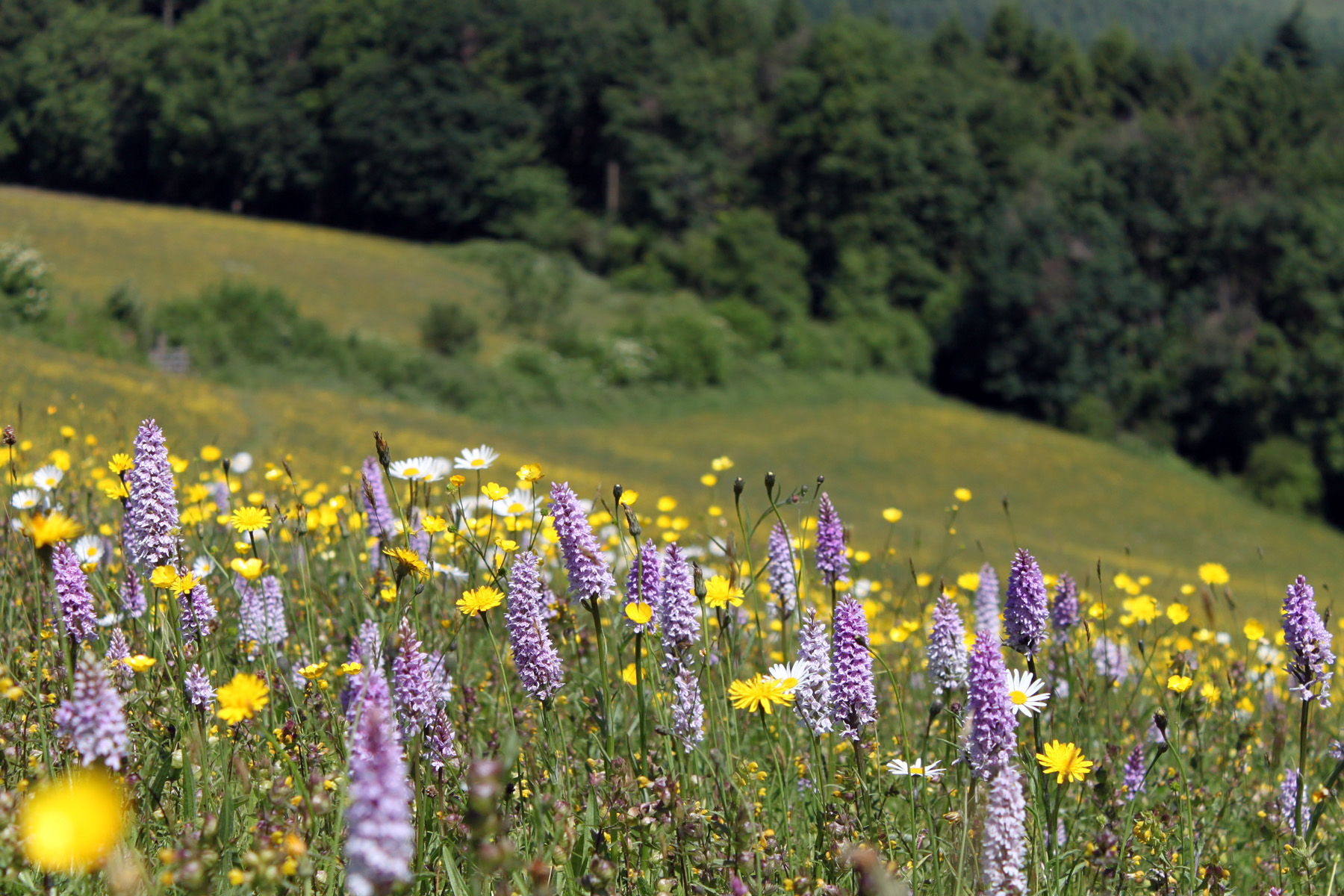
Kate has restored 4.55ha of species poor grassland using funds very generously provided by Herefordshire Council via their Natural Flood Management (NFM) Project and brush harvested seed from Bromyard Downs.
After an introduction to the site itself we discussed the restoration methods used. A shallow power harrow immediately after the hay cut helped to open up the grass dominated sward and create enough bare earth before the introduction of the donor seed.
We then discussed the importance of keeping the sward open over the first winter and discussed the different methodologies for achieving this; both through grazing and mechanical means. The key message is to take the seedling’s eye view and think about how to maximise the availability of the three essential things needed for germination; light, air and water.
Grazing needs to be monitored carefully to avoid unwanted soil damage through poaching if conditions get too wet in the winter, and also to ensure that any livestock is removed the following spring before they start eating desirable wildflower seedlings, in particular yellow rattle which is an annual.
Split into two groups, attendees then had a go at identifying some of the early seedlings already emerging. The following desirable broad-leaved herbs were recorded:
Meadow buttercup, Common mouse-ear, Dandelion, Red clover, cuckoo flower, Self heal, common sorrel, lesser trefoil, black knapweed, yarrow, rough hawkbit, common cat’s ear and ox-eye daisy.
*species in bold are indicator species new to the site.
We then talked about less desirable species, how the risks of these germinating can also increase following grassland restoration works, and when and how is the best time to control them. Selective spot spraying or mechanical removal is suggested during the autumn and early spring and, in the case of spot spraying, when the livestock have been removed.
If you want to have a go at some seedling ID yourself here is a link to our Wildflower seedling ID chart
